
Masterclass in Mobility: Elevating C-Suite and Board Ground Transportation
By BCN News Desk
In corporate travel, ground transportation is often the most vulnerable link in an itinerary. While first-class air travel and luxury accommodations operate with predictable precision, local destination mobility can present unexpected friction—from airport transfer bottlenecks to complex multi-venue schedules.
When managing travel for C-level executives, board members, and high-net-worth directors, seamless transportation is a strategic imperative. Whether organizing high-stakes board retreats, multi-city financial roadshows, or corporate summits, elevated ground transportation protects schedule integrity, privacy, and executive focus.
1. Shift to Centralized Chauffeured Networks
Relying on fragmented local suppliers or on-demand rideshares introduces unnecessary operational risk, volatile pricing, and inconsistent vehicle standards. Enterprise travel programs increasingly favor centralized chauffeured networks that operate under a single service level agreement (SLA) across global destinations.
Single-Point Accountability: Utilizing centralized dispatch systems allows travel managers and Executive Assistants (EAs) to oversee real-time vehicle positions, itinerary updates, and chauffeur details across multiple cities through one point of contact.
Consistent Fleet Standards: Centralized networks enforce uniform safety protocols, executive vehicle standards, and duty-of-care requirements regardless of destination.
2. Match Fleet Assets to Executive Mission Profile
Executive mobility requires selecting vehicle platforms tailored to specific travel needs.
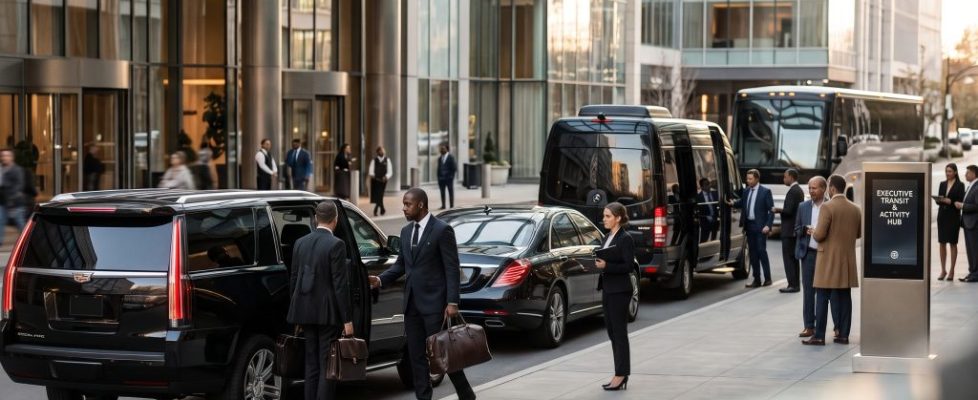
Chauffeured Executive SUVs & Sedans: Ideal for solo executives or small two-to-three-person leadership teams requiring rapid transfers, quiet mobile office spaces, and discrete point-to-point transit between airport private aviation FBOs and downtown venues.
Executive Sprinters & Luxury Coaches: For board movements or executive delegations traveling together between hotel venues and off-site dinner meetings, high-roof Sprinters and luxury motorcoaches provide standing room, conference seating, Wi-Fi, and onboard AV integration. Group travel builds team cohesion and ensures punctual arrivals for scheduled sessions.
Stretch Limousines & Armored Vehicles: Best reserved for high-profile keynote speakers, executive protocol visits, or specialized security requirements demanding reinforced protection and privacy glass.
3. Integrated Flight Tracking and Airport FBO Protocol
Ground delays often originate during airport pickups. Executive transportation partners should utilize live radar flight telemetry directly integrated into chauffeur dispatch software.
Commercial Flight Telemetry: Automated tracking syncs driver arrival times to actual aircraft touchdown rather than scheduled gate arrival, eliminating tarmac wait times or unexpected surcharges during delays.
Fixed-Base Operator (FBO) Logistics: When managing private aviation transfers, ground operators must hold active ramp permits and pre-clear driver credentials with local airfields to provide tarmac plane-side pickups where permitted.
4. Optimize the “Mobile Boardroom” Workspace
Travel time should serve as productive working hours. Executives traveling between consecutive meetings require vehicles configured for digital connectivity and confidentiality.
Privacy & Security Protocols: Vehicles should feature heavy window tinting, physical partition screens, and privacy glass. Chauffeurs must operate under strict non-disclosure standards to protect confidential phone calls and board discussions.
Connectivity Infrastructure: Fleet vehicles should offer high-speed cellular Wi-Fi, multi-device charging ports, 110V AC power outlets, and HDMI monitor feeds for presentation reviews on Sprinter screens.
Executive Fleet Selection Matrix
Summary for Travel Managers
Ground transportation reflects an organization’s operational discipline. By standardizing chauffeured services, aligning vehicle selection with mission scope, and deploying real-time tracking, travel managers ensure that C-suite leaders and board members arrive prepared, punctual, and positioned for success.