
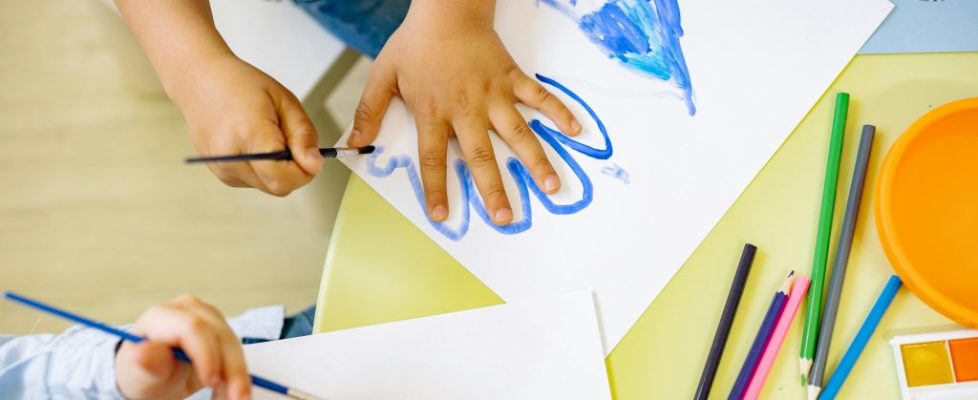
The Role of Play in Cognitive and Creative Development
How structured and unstructured play nurtures problem-solving, imagination, and learning in children
For children, play is far more than entertainment—it’s brainwork in disguise. From stacking blocks to inventing imaginary worlds, play is the mechanism through which children explore, learn, and grow. Scientists, educators, and psychologists now agree that both structured and unstructured play are essential for cognitive and creative development, especially between the ages of 2 and 10, when the brain is most malleable.
Yet, in a world increasingly dominated by screens and structured schedules, opportunities for free and meaningful play are shrinking. Understanding the critical role of play can help parents, teachers, and program developers create environments that maximize both learning and creativity.
Cognitive Growth Through Play
Cognitive development involves the processes through which children acquire knowledge, solve problems, and understand the world. Play is one of the most effective ways to foster these skills.
Jean Piaget, one of the pioneers of child development theory, described play as a primary avenue for children to experiment with concepts like cause and effect, spatial reasoning, and classification.¹ When a preschooler sorts colored blocks by size or shape, they are practicing categorization, pattern recognition, and logical thinking—skills that form the foundation for mathematics and science.
A 2019 study published in Early Childhood Research Quarterly found that children who engaged in daily unstructured play demonstrated significant improvements in executive function, including working memory, planning, and cognitive flexibility, compared to peers with limited play opportunities.²
Structured Play: Skill-Building With Purpose
Structured play involves activities guided by an instructor or following specific rules, such as sports drills, group games, or Kidokinetics classes. These activities enhance cognitive skills by introducing challenges, sequencing, and problem-solving in a controlled setting.
For example:
- Following the rules of a relay race teaches planning and attention.
- Learning to catch or throw a ball enhances hand-eye coordination and spatial reasoning.
- Solving an obstacle course with multiple steps encourages strategic thinking.
Structured play also provides immediate feedback. When children succeed or fail at a task, they learn cause-and-effect relationships, improving self-regulation and critical thinking.
Unstructured Play: The Power of Imagination
While structured play teaches discipline and problem-solving, unstructured play—free, child-led, and imaginative—cultivates creativity, innovation, and resilience.
During pretend play, children take on roles, invent scenarios, and navigate rules they create themselves. Psychologists have found that such play promotes cognitive flexibility, the ability to switch perspectives and generate novel solutions.³
In addition, unstructured play often encourages risk assessment and emotional learning. When a child climbs a tree, navigates a makeshift balance beam, or invents a complex game with friends, they are learning to manage uncertainty, solve problems, and persist through challenges.
The Neuroscience of Play
Play is not just a psychological phenomenon; it has measurable effects on brain development. Physical, imaginative, and problem-solving play activates multiple brain regions, including:
- The prefrontal cortex, responsible for executive function and decision-making.
- The hippocampus, critical for memory and spatial awareness.
- The cerebellum, involved in coordination, timing, and even some aspects of cognitive processing.
Movement during play enhances blood flow and oxygen delivery to the brain, supporting neural growth. A 2020 review in Frontiers in Psychology highlighted that children with high levels of both structured and unstructured play exhibited better problem-solving abilities, creativity scores, and academic readiness.⁴
Play and Social Cognition
Cognitive and creative development are deeply intertwined with social skills. Play provides opportunities for children to interact, negotiate, and cooperate, strengthening social cognition.
Through group games and pretend scenarios, children learn to:
- Recognize and respond to others’ perspectives
- Develop empathy and communication skills
- Manage conflict and negotiate rules
These social competencies feed directly into cognitive and emotional growth. For instance, collaborative problem-solving in a play scenario can mirror real-world reasoning skills used in group projects, academic tasks, and everyday decision-making.
Play as a Stress Buffer
Play is also critical for emotional health, which in turn affects cognitive performance. Engaging in enjoyable, voluntary activities reduces cortisol levels, promotes positive mood, and increases dopamine and serotonin—neurochemicals essential for learning and memory.
When children experience stress at school or home, unstructured play provides a safe outlet for emotional regulation, allowing their brains to reset and focus. Research from the American Academy of Pediatrics underscores that play is vital for stress management, focus, and executive function, especially during early childhood.⁵
The Role of Movement in Cognitive and Creative Play
Physical movement is often central to play and is particularly important for children aged 2–10. Activities like running, climbing, balancing, and jumping engage motor skills while simultaneously stimulating cognitive pathways.
- Gross motor activities—like obstacle courses—enhance spatial reasoning, planning, and sequencing.
- Fine motor activities—like building with small blocks or threading beads—improve hand-eye coordination, attention to detail, and problem-solving.
- Cross-lateral movements—using opposite limbs in coordination—boost neural communication between brain hemispheres, aiding memory and cognitive flexibility.
Movement-based play teaches children to learn through their bodies, embedding concepts in experience rather than abstract instruction.
Kidokinetics: Structured Play for Cognitive Growth
Programs like Kidokinetics bridge the gap between structured skill-building and playful exploration. Each class integrates physical activity, problem-solving challenges, and cooperative games to foster cognitive, social, and creative development.
By offering age-appropriate, research-backed activities, Kidokinetics helps children:
- Develop gross and fine motor skills
- Strengthen attention, planning, and memory
- Improve confidence, resilience, and problem-solving
- Engage socially and creatively in supportive environments
Parents often report improvements not only in physical abilities but also in focus, creativity, and classroom readiness, demonstrating the interconnected benefits of movement and play.
Practical Strategies to Encourage Play at Home and School
You don’t need a specialized program to promote cognitive and creative development through play. Here are some practical ideas:
- Rotate structured and unstructured play: Balance guided games with free imaginative time.
- Incorporate problem-solving: Set up obstacle courses, scavenger hunts, or building challenges.
- Encourage role-play: Dress-up, pretend kitchens, and storytelling support social and creative thinking.
- Include movement: Dance, yoga, and active games engage the brain and body simultaneously.
- Foster reflection: Ask children about their strategies, ideas, and solutions to encourage metacognition.
Consistency is key. Daily opportunities for both structured and imaginative play ensure children are exercising both their bodies and minds.
Conclusion: Play as the Engine of Learning
Play is not a luxury—it is a fundamental component of healthy cognitive and creative development. Children learn best when they explore, move, and engage their imaginations in supportive environments.
By integrating structured activities, movement, and unstructured creativity, programs like Kidokinetics equip children aged 2–10 with critical thinking, problem-solving, social, and motor skills that lay the groundwork for lifelong learning.
When children play, they are doing far more than having fun—they are building the brainpower, confidence, and creativity that will support every challenge, in school and beyond.
Play is not just the work of childhood; it is the foundation of a successful, resilient, and imaginative life.
References
- Piaget, J. (1962). Play, Dreams and Imitation in Childhood.
- Lillard, A., et al. (2019). Early Childhood Research Quarterly. “Play and Executive Function Development.”
- Russ, S. (2016). Pretend Play and Creativity in Childhood.
- Fisher, K.R. et al. (2020). Frontiers in Psychology. “The Cognitive Benefits of Play in Early Childhood.”
- American Academy of Pediatrics (2020). “The Importance of Play in Promoting Healthy Child Development.”


